


Engineering case study
AI E-Learning Platform
Learning, connected in real time.
A MERN learning platform combining facial recognition, emotion detection, classroom recommendations, real-time conversations, and an AI chatbot.
The problem
A digital learning environment needs more than course content: students also need interaction, access, and relevant resources. This project brings AI-assisted learning features and live communication into one web platform.
Project context
Education / AI integration / MERN
Implementation scope
- Facial recognition and emotion detection using machine learning.
- GitHub and Google Classroom recommendations, plus an AI chatbot.
- WebSocket chatroom, Google OAuth, and a CI/CD deployment workflow.
Project showcase
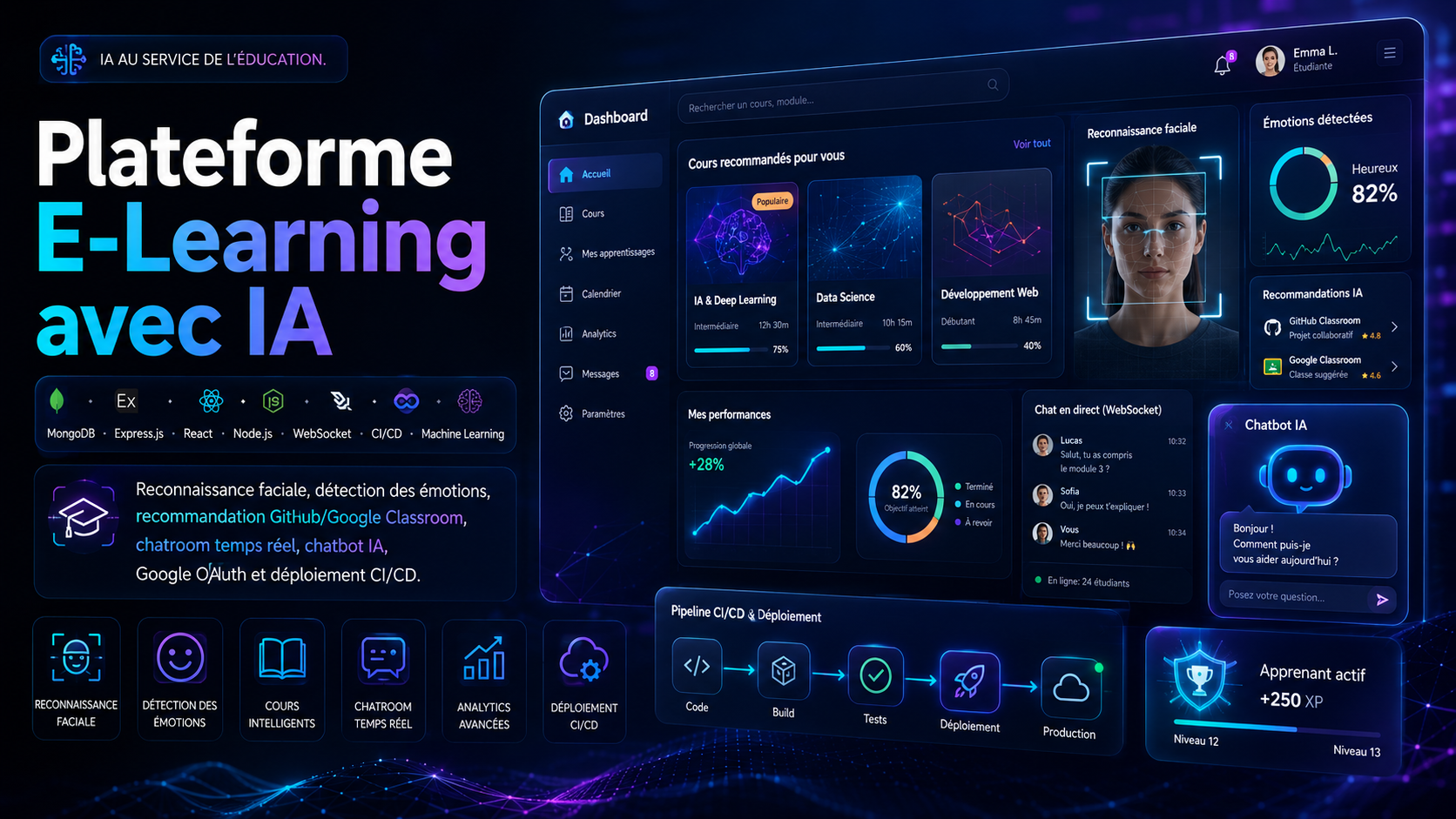
AI-generated project illustration, not an application screenshot. Any displayed metrics are illustrative.
System architecture
- 01Sign in
- 02Learning space
- 03AI support
- 04Live chat
- 05Delivery
Learning interface
React
The frontend layer for learner interaction, recommendations, and conversations.
Application & data
Node.js / Express.js / MongoDB
The MERN backend and database foundation for the learning platform.
Intelligent features
Machine Learning / AI chatbot
Facial recognition, emotion detection, and GitHub/Google Classroom recommendations.
Connected delivery
WebSocket / Google OAuth / CI/CD
Real-time chat, Google sign-in integration, and automated delivery workflows.
Engineering considerations
01Keep AI supportive, not authoritative.
Emotion detection should be treated as a model inference, not a reliable diagnosis or a definitive assessment of a learner. Clear communication of uncertainty is important for this type of feature.
02Design for live conversations.
A WebSocket chatroom introduces connection state, message ordering, and reconnect considerations alongside the regular HTTP application flow.
03Treat identity and facial data carefully.
Google OAuth and facial recognition introduce different privacy boundaries. Consent, data minimization, and protection of identity information are important review points.
Technical focus
- Combining MERN application development with machine-learning features.
- Connecting real-time communication with an educational user experience.
- Bringing authentication and CI/CD into a full-stack project.
Possible extensions
Possible extensions include accessibility testing, clearer AI consent controls, and evaluating recommendation relevance. These are improvement opportunities, not claims of completed work.